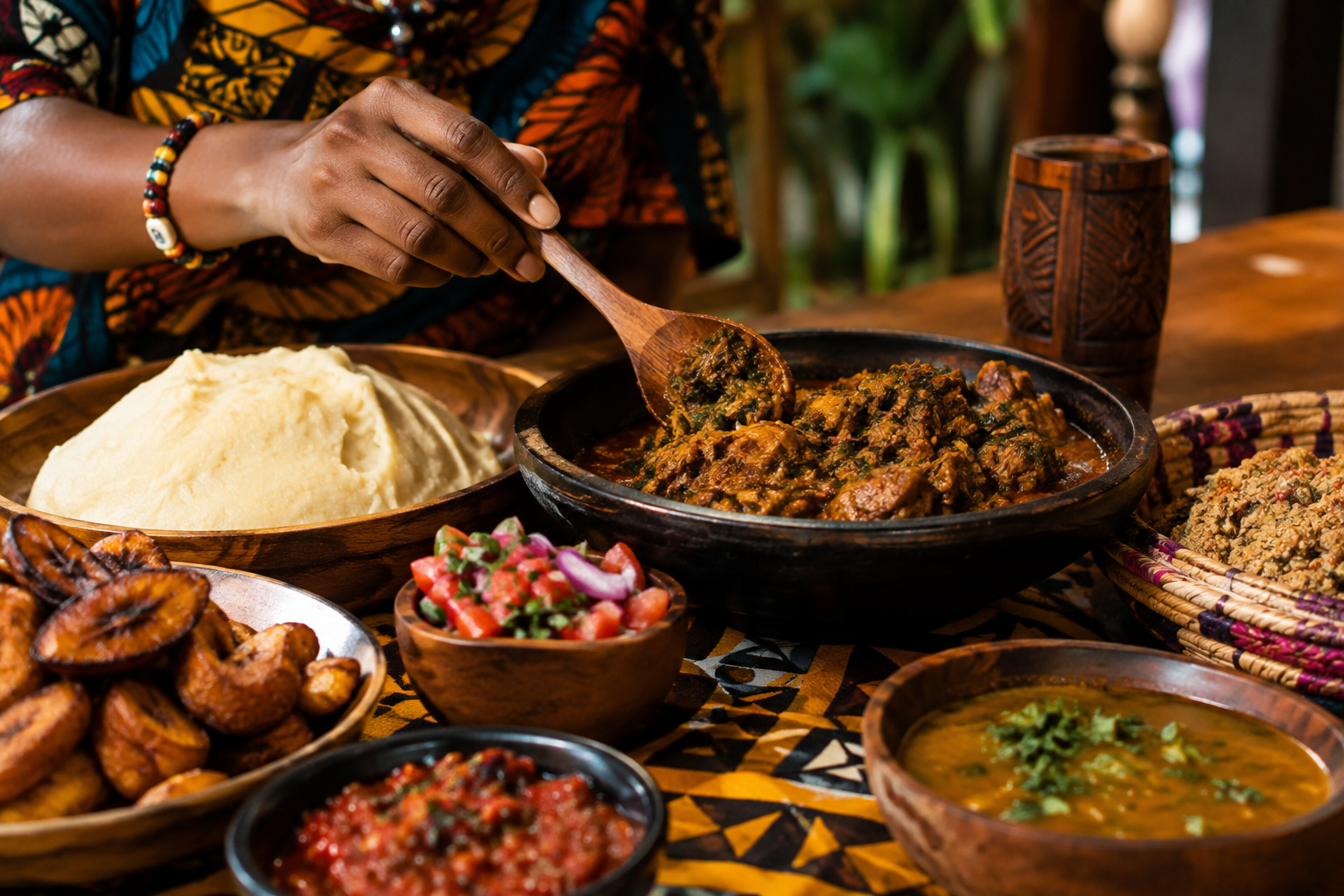
Food is one of the easiest ways culture travels.
A person can leave home and move to another continent.
But the recipes can come with them.
The ingredients may change.
The cooking equipment may change.
The environment may change.
But the memory of the food can remain.
For many African communities, food is connected to family, celebration, hospitality and belonging.
It is not simply something people eat.
It can be part of how people remember home.
Food and memory
A particular dish can remind someone of a parent or grandparent.
A smell can bring back childhood.
A particular preparation can be connected to celebrations or important family occasions.
This is why food can become a powerful subject for cultural journalism.
Instead of simply asking:
What African food is popular?”
Echoes can ask:
“What does this food mean to the people who make and eat it?”
Food in the diaspora
Migration changes food.
Someone living in Barcelona may not have access to exactly the same ingredients available in their home country.
They adapt.
They find substitutes.
They import ingredients.
They discover local markets.
They introduce their food to people who have never experienced it before.
Restaurants and home kitchens can therefore become cultural bridges.
An African restaurant can be a place where diaspora communities meet, but it can also become a place where people outside those communities encounter African food for the first time.
The people behind the food
Food stories should also focus on the people doing the work.
Chefs.
Restaurant owners.
Home cooks.
Food entrepreneurs.
Farmers.
Caterers.
Food photographers.
People creating new African food businesses.
Their stories can reveal another side of African entrepreneurship and creative culture.
A restaurant may begin because someone missed the food they grew up eating.
Another may start because a chef wants to introduce a particular regional cuisine to a new audience.
Another may combine African ingredients with local European cooking.
Each approach tells a different story.
African food is not one cuisine
There is no single African cuisine.
The continent contains enormous culinary diversity.
West African food is different from East African food.
North African food is different from Southern African food.
Even within individual countries, different regions have their own ingredients, techniques and dishes.
That diversity should be reflected in coverage.
Echoes should avoid presenting one dish or one cooking tradition as representative of an entire continent.
That diversity should be reflected in coverage.
Echoes should avoid presenting one dish or one cooking tradition as representative of an entire continent.
Food as cultural infrastructure
Food can preserve language, family traditions and community relationships.
A recipe can be passed from one generation to another.
A restaurant can become a meeting place.
A market can become a cultural space.
A meal can introduce children born outside Africa to traditions they might otherwise never experience.
That makes food an important part of cultural documentation.
Echoes perspective:
To document African food is also to document memory, migration, family, entrepreneurship and community. Sometimes a plate of food tells a story that an interview alone cannot.