

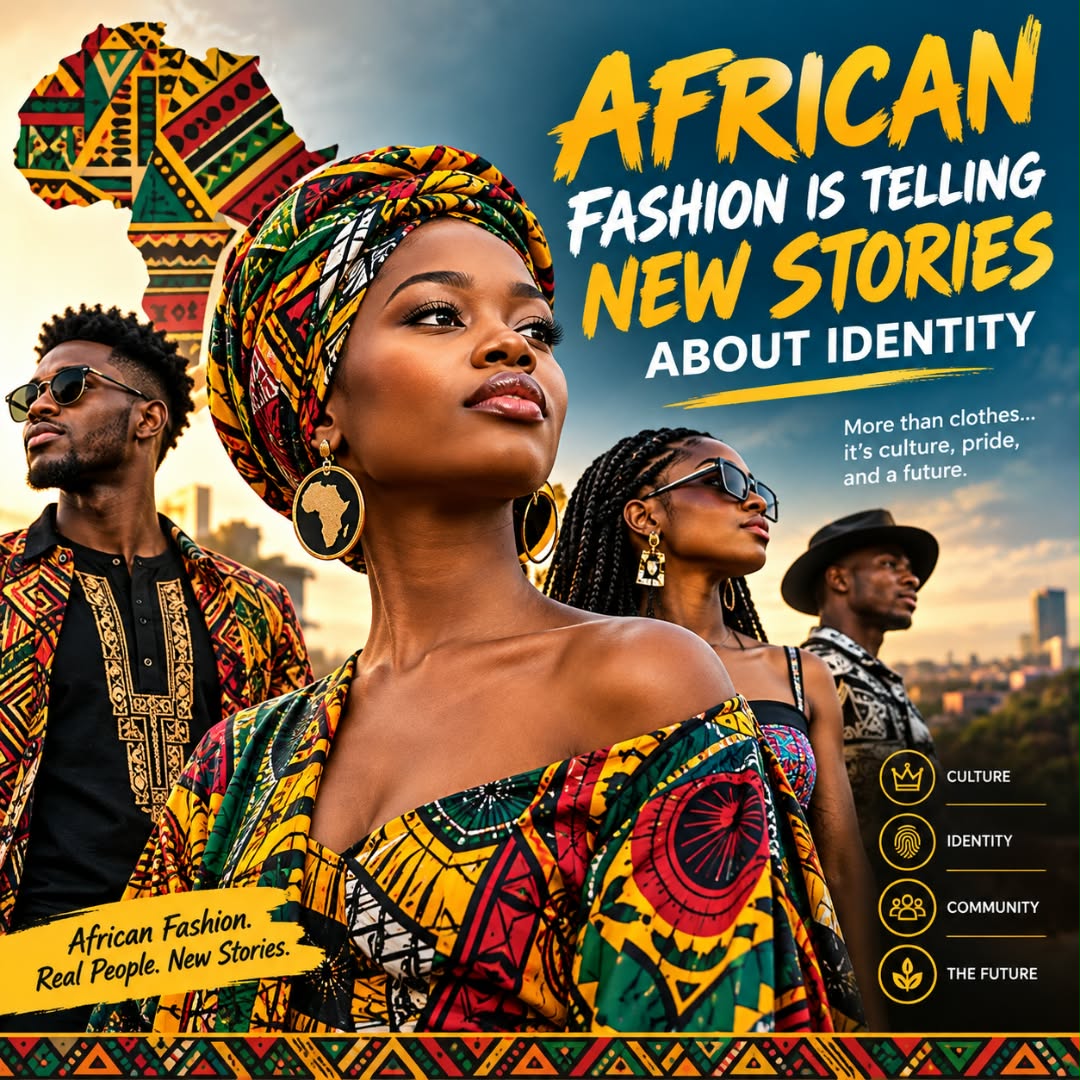

Clothing can communicate before a person says a word. It can tell people where someone comes from, what they value, what community they belong to and how they want to be seen.
African fashion has always carried this kind of meaning. Traditional fabrics, patterns, colours and garments can carry cultural and historical associations.
But contemporary African fashion is not limited to tradition. Designers are experimenting. Young people are combining African references with global fashion.
African brands are building businesses for local and international customers. Diaspora communities are creating their own interpretations of style.
This creates an interesting question. What does African fashion mean today?
For some people, it is directly connected to heritage.
For others, it is simply part of personal style.
For designers, it can be a creative language.
For entrepreneurs, it can become a business.
For younger Africans living abroad, clothing can sometimes become a way of reconnecting with identity.
The important thing is not to assume that everyone wearing African-inspired clothing has the same relationship with it.
Every person has a different story. That is why fashion stories should look beyond photographs of clothes.
Who designed the piece?
Why was it made?
Where did the inspiration come from?
Who is buying it?
What does the clothing mean to the person wearing it?
How does the designer operate as a business?
These questions transform fashion coverage into cultural journalism.
The clothes remain important.
But the people behind them make the story