


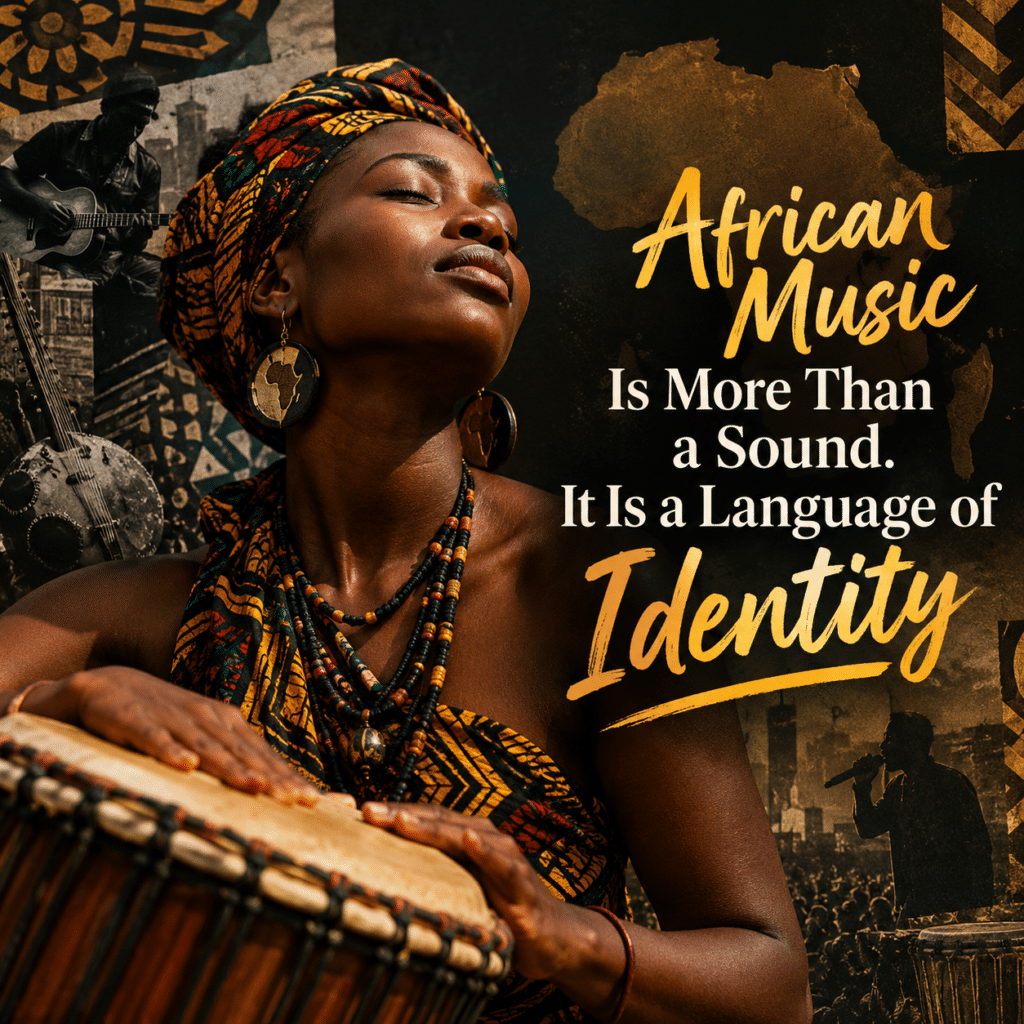
African music has always been more than something to listen to. It can carry language, memory, history, emotion and identity. A song can remind someone of home. A rhythm can connect generations.
A melody can bring back a place that someone has not visited for years. This becomes particularly visible when African music travels beyond the continent.
For someone living away from home, music can become one of the easiest ways to maintain a connection with where they come from. It can exist in a person’s headphones, at a family gathering, in a nightclub, at a festival or in the background of an ordinary day.
That connection does not always require someone to consciously think about identity. Sometimes it is simply the sound of a familiar language. Sometimes it is a rhythm that immediately feels recognisable. Sometimes it is an artist describing an experience that listeners understand because they have lived something similar.
African music also continues to change.
Artists are combining local influences with sounds from different parts of the world. Producers are experimenting with new production techniques. Younger listeners are discovering older records while creating their own interpretations of African music. This makes the conversation around African music more complicated than the question of which genre is currently popular.
The more interesting question is what these sounds mean to the people creating and listening to them.
Music can become a record of a particular moment. It can document what young people are thinking about, how cities are changing, how people experience love, money, migration, ambition and belonging.
It can also challenge the idea that African music is one thing.
Africa is a continent of different countries, languages, histories and musical traditions. Nigerian music is not Ghanaian music. South African music is not Senegalese music. Congolese music is not Ethiopian music. Even within one country, different regions and generations can create completely different musical worlds.
That diversity is part of what makes African music worth documenting.
At Echoes of Africa, music is therefore not only about releases and performances. It is also about the people, places and stories behind the sound.
A new song can be the beginning of a story.
An artist can open a conversation about identity.
A genre can reveal something about a generation.
A performance can show how a community comes together.
The music matters.
But the story around the music matters too.

