

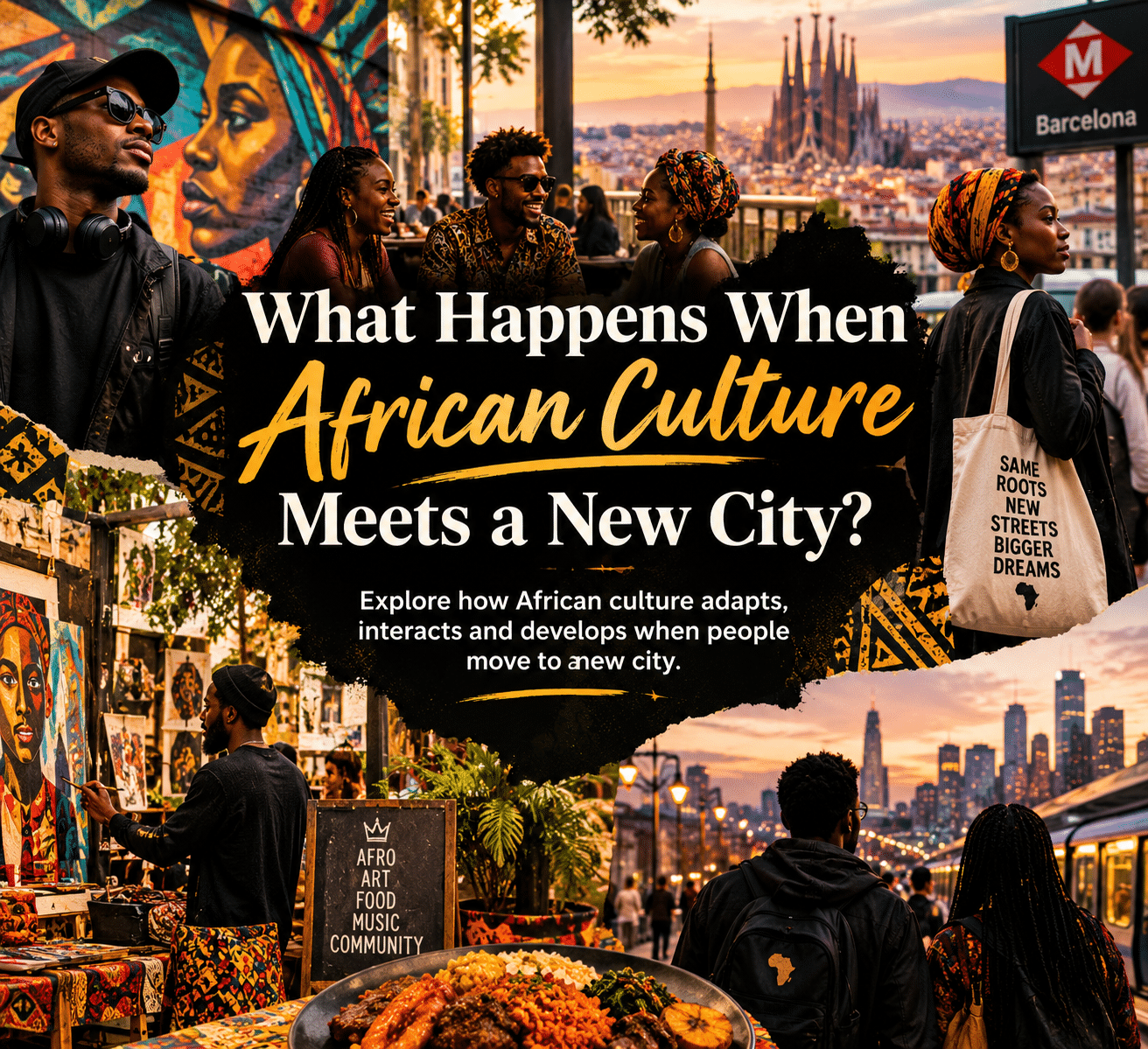
Culture does not stay still.
When people move from one place to another, their culture moves with them. But once it enters a new environment, something interesting happens. It begins to interact with what is already there.
African culture in European cities provides a clear example. Music enters local nightlife. Food enters restaurants and homes. Fashion appears in streets and creative spaces. Dance moves between communities.
Languages mix.
New friendships form.
New businesses appear.
New cultural spaces are created.
This does not necessarily mean that one culture replaces another. More often, people adapt.
A traditional dish may be prepared with ingredients available in a new country.
A familiar style of clothing may be combined with European fashion.
A music event may bring together people from different African countries and local audiences.
A young person may grow up speaking a European language at school while using an African language at home.
Culture becomes something negotiated between different environments.
This is particularly important for younger generations.
They may not experience African identity in exactly the same way as their parents.
Their understanding may be influenced by where they were born, where they live, the languages they speak, their friendships, music, social media and family history.
There is no single African experience.
There is no single African identity.
That is why stories about African culture should begin with people rather than assumptions.
Who are they?
Where did they come from?
What did they bring with them?
What have they changed?
What have they kept?
What have they discovered?
These questions can reveal a much more interesting picture of culture than simply presenting traditions as something from the past.
African culture continues to develop.
Cities become meeting points.
People create new combinations.
And the result is a cultural landscape that is constantly changing.

